
The One Thing Most Homebuyers Never Research—Until After They Move In
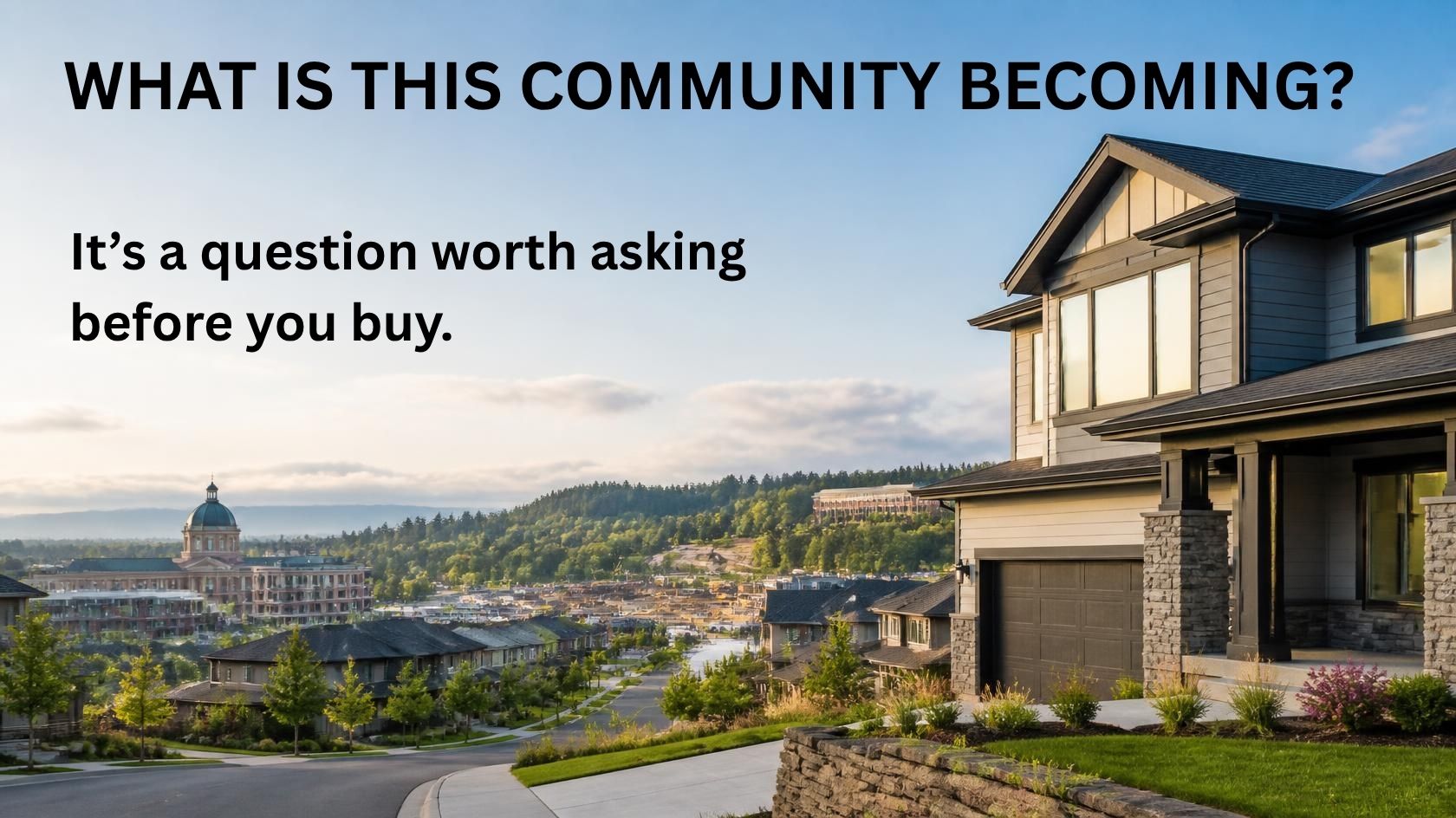
The One Thing Most Homebuyers Never Research—Until After They Move In
When you're buying a home, there is a lot to research.
You look at the house itself. You check the schools. You think about the commute. You may research crime statistics, property taxes, restaurants, parks, shopping and what homes are selling for nearby.
You might drive through the neighborhood at different times of day.
But there is one thing that most homebuyers don't think to research until they're already living there:
How does the city actually operate?
After decades of helping Michigan families finance homes, I've learned that buying a home isn't simply about choosing a house you like and figuring out how to finance it.
You're also choosing a community.
And if you expect to live there for many years, the decisions made by that community's local government can have a meaningful effect on your day-to-day quality of life—and potentially on the desirability and value of the property you've worked so hard to acquire.
I'm not suggesting that you need to become an expert in municipal government before buying a home.
But I do think there are some questions worth asking.
How Long Do You Expect To Stay?
This may be the first question to ask yourself.
If you're purchasing a home you expect to own for only a few years, you may have different priorities than someone who intends to raise a family there, stay for decades, or eventually retire in the home.
The longer you expect to stay, the more important it becomes to understand not only what the community looks like today, but what is happening around you and what the community's plans are for the future.
Because communities change.
And they don't usually change all at once.
They change one zoning decision, one development, one road project, one tax proposal and one municipal investment at a time.
What Is The City's Vision For The Future?
Before buying, take a look at the city's master plan, zoning map and recent development decisions.
You don't have to understand every provision.
Instead, look for the bigger picture.
Are residential areas being preserved, or is there increasing commercial or higher-density development?
Are new developments being planned?
Are roads being expanded or substantially changed?
Are there plans for new public facilities?
Are businesses being encouraged to locate closer to established residential neighborhoods?
None of these things are automatically good or bad.
But they can change what it is like to live in a neighborhood.
A quiet residential street today may not necessarily have the same traffic pattern, noise level or surrounding land uses ten years from now.
What Happens When Residents Disagree?
Here's another question that doesn't occur to most buyers:
How does the city involve its residents in decisions that affect them?
You can learn something simply by attending a city council meeting—or even watching a recording of one.
Pay attention to more than the official business.
Listen to the public comments.
Look at the issues residents are bringing forward.
Then look at what happens afterward.
Are residents simply given an opportunity to speak, or is there a process for gathering resident input before major decisions are made?
How does the city communicate with homeowners?
Are there public surveys, neighborhood meetings, advisory boards, newsletters or other ways residents can provide input?
And when significant changes are proposed, how much notice do residents receive?
You don't have to agree with every resident's position.
The point is to understand how the community makes decisions and how homeowners participate in that process.
What Are You Actually Going To Experience Every Day?
A city can look wonderful on a Saturday afternoon.
That doesn't necessarily tell you what it will feel like to live there every day.
Consider things that don't usually show up on a real estate listing:
· School pickup and drop-off traffic
· Parking restrictions
· Truck routes
· Road construction
· Noise
· Commercial activity near residential areas
· Traffic generated by new development
· Construction projects that may last for years
· Street maintenance
· Garbage and snow removal
· Parks and recreation facilities
· How well public infrastructure is maintained
These are quality-of-life issues.
And they're worth investigating before you make a long-term commitment.
For example, you might love a house on a particular street—only to discover after moving in that twice a day during the school year, getting in and out of your own street is difficult.
Or perhaps a property seems wonderfully quiet when you tour it on a Sunday afternoon, but a nearby commercial operation creates truck traffic and noise during the workweek.
Those aren't necessarily reasons not to buy.
They're reasons to know what you're buying into.
Follow The Money
Here's another piece of municipal research that most homebuyers overlook:
Where does the city's money go?
You can look at municipal budgets, proposed millages, capital improvement plans and major expenditures.
You don't have to be a municipal finance expert.
Look for patterns.
What is the community investing in?
What major projects are being funded?
What are residents being asked to approve through millages?
Is the city investing heavily in roads and infrastructure?
Public safety?
Parks?
New facilities?
Technology?
Economic development?
Again, this isn't about deciding whether a particular expenditure is right or wrong.
It's about understanding the priorities of the community you're considering calling home.
Look Beyond Today's Property Value
Most buyers look at recent comparable sales to determine whether a particular house is priced appropriately.
That's important.
But if you're thinking long-term, you can also look at the broader history of the community.
How have home prices changed over time?
How long do homes typically stay on the market?
Are homes selling quickly, or are they sitting longer?
How does the community compare with nearby communities?
What has happened to the population?
Are people staying in the area, or is there significant turnover?
Are there increasing numbers of vacant properties or rental properties?
No single statistic tells you whether a community is desirable.
But several trends viewed together can give you a much better picture than looking at today's listing prices alone.
Don't Just Research What The City Is. Research What It Is Becoming.
This may be the most important part.
When you're buying a home, you're making a decision based largely on what you can see today.
But your ownership may last five years, ten years, twenty years or longer.
So ask yourself:
What could change?
Look at recent zoning changes.
Look at major developments.
Look at infrastructure projects.
Look at population trends.
Look at the city's plans.
Look at what residents are talking about.
And look at how local decisions have affected the community in the past.
You aren't trying to predict the future.
You're simply gathering information so that the future doesn't completely surprise you.
A Simple Pre-Purchase Community Checklist
Before purchasing a home, consider spending a little time researching the community itself.
Attend or watch a city council meeting
What issues are residents raising? How are decisions discussed?
Review the city's master plan
What does the community say it wants to become?
Look at the zoning map
What's allowed near the property you're considering?
Research recent zoning and development decisions
What's changing nearby?
Look at major infrastructure projects
What roads, facilities or other projects are planned?
Review the municipal budget and recent millage proposals
Where are resources being directed?
Research property-value trends
Look beyond one house and examine the community over time.
Visit the neighborhood at different times
Try a weekday morning, afternoon, evening and weekend.
Listen to residents
Local community groups and public meeting comments can reveal issues you may not see during a showing.
Ask yourself how long you really expect to stay
Your priorities may be different if you're buying for three years versus thirty.
You're Buying More Than A House
Buying a home is both a personal decision and, for most people, one of the largest financial commitments they'll ever make.
So yes, research the house.
Research the schools.
Research the commute.
Research the neighborhood.
But consider adding one more item to your list:
Research the community that governs the place you're about to call home.
You don't have to agree with every decision the city makes. You don't have to become involved in local government. And you certainly don't have to predict everything that could happen in the future.
You simply want enough information to decide whether the community's direction, priorities and quality of life fit what you're looking for.
Because when you put down roots, you're not just buying a house.
You're choosing where you want to live.

